
EDUCATION HVAC
Fresh Air for Full Classrooms. Controls for Empty Ones.
Education HVAC must deliver fresh air and stable temperatures to densely occupied rooms, keep noise low enough for teaching and follow the timetable across terms, holidays and evening use.
SYSTEM APPROACH
Classroom-Level Air Quality. Campus-Level Control.
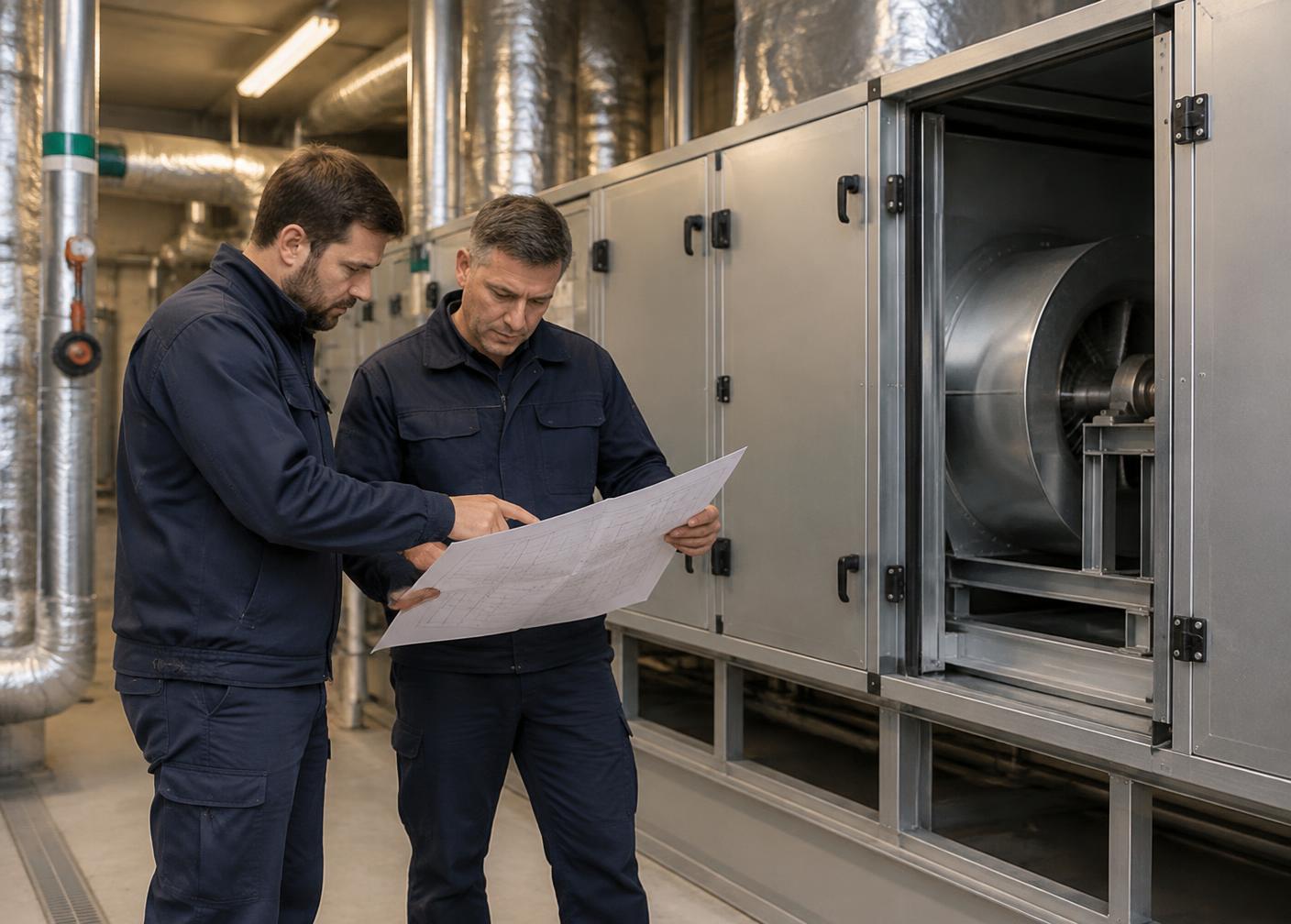
Hollis & Pike supports education projects from central plant and heat recovery ventilation through classroom terminal equipment and controls.
Classrooms, lecture theatres, laboratories, sports halls and dining areas each have different occupancy densities and operating hours. The right approach ventilates densely occupied rooms effectively, avoids noise that interferes with teaching and allows each building or room to be scheduled, set back or run on its own for evening and holiday use.
ENGINEERING CONSIDERATIONS
What Shapes the Selection.
01
Occupancy density and CO₂
Classrooms are fully occupied for fixed periods, so ventilation is sized for the occupied condition and controlled on CO₂. School ventilation follows national guidance, such as BB101 in England.
02
Acoustics for teaching
Ventilation plant, terminal units and air paths must meet demanding classroom acoustic criteria, and openings for natural ventilation need checking against external noise.
03
Summer overheating
Many teaching buildings are not mechanically cooled, so overheating in the summer term is managed through ventilation rates, night cooling and, where needed, cooling in the most exposed rooms.
04
Mixed-mode ventilation
Openable windows combined with mechanical heat recovery ventilation reduce energy use in mild weather while maintaining air quality in winter, when windows stay closed.
05
Timetables and part occupancy
Controls should follow the timetable, holidays and evening lettings, so a single block, hall or room can operate without conditioning the whole site.
06
Robust controls and access
Room controls in teaching spaces need to resist tampering, and plant should be positioned so routine maintenance can take place outside teaching hours.